

In the modern world the internet and its services have become an integral part of everyday life; indispensable. A greater use of the services offered by the web has focused attention on the protection of the privacy of some sensitive information; provided daily by ourselves to sites and services. To this end, VPN or proxies can be useful to avoid our data to end up in the hands of attackers. Proxy servers and VPNs act as an intermediary between the applicant and the server that receives the commands. In this way, the server is not able to know the user's IP address. Operations can thus be protected. Depending on the location of the server of our VPN or proxy, there is the possibility of being connected from a geographical position that does not really coincide with our own; allowing access to services not offered by the region itself. In China a VPN or proxy can be useful to access services such as Google, YouTube, Google Maps or others.
Proxy
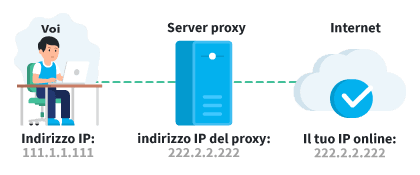
Proxy is a shield server between us and the web. By accessing the Internet, data traffic passes through the server where it originates, not through our computer. Proxy is an intermediary that does not add any encryption. Therefore, the transmitted data is more vulnerable. The server simulates a call from a call center: the raised number is not actually that of the issuer, but of a switchboard that acts as an intermediary for all operators.
VPN
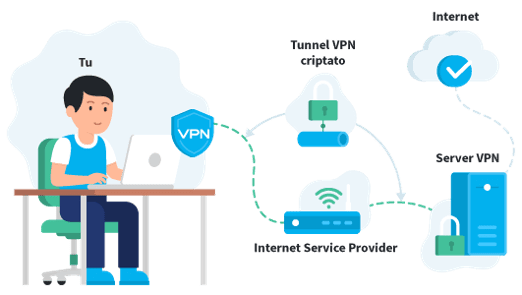
VPN also stands between the user and the Web by changing the IP address of the requester. The difference lies in the fact that VPN has a higher level of security because the transmitted data is encrypted. This protects the data traffic from hacker attacks. Encryption also hides the data from the internet provider who will only be able to connect to the server.
Proxy e VPN
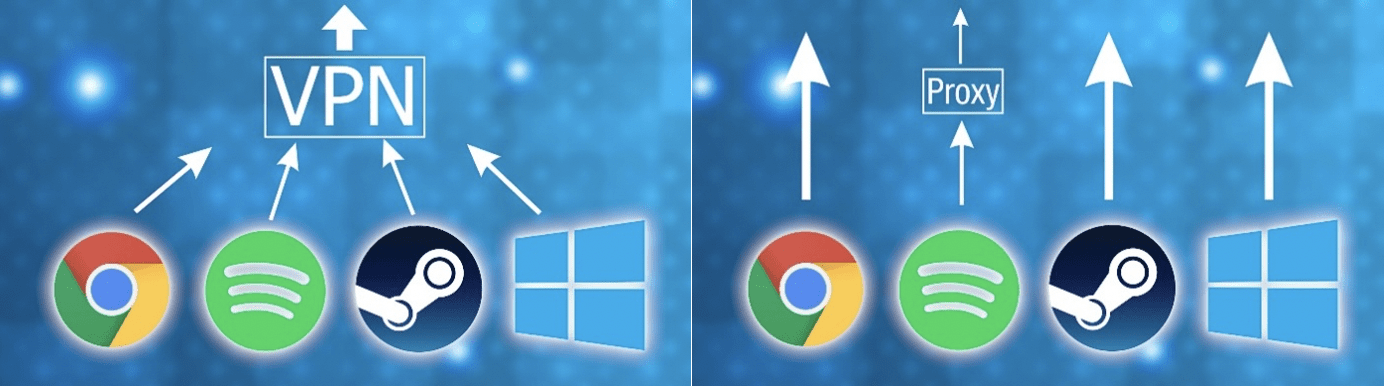
The VPN allows all transmitted traffic to first pass through itself and then be transmitted to the web. A VPN can thus add a level of security regardless of the type of application or service. A proxy, on the other hand, often interposes itself at the level of the individual app, thus passing through the transmitted data of a specific application and filtering only a portion of the traffic. A VPN performs multiple operations simultaneously. This is why it is usually slower than a proxy; which only redirects traffic. A low quality proxy, like the free ones, can be shared by several users at the same time. Thus the connection speed is low. The proxy acts only as an intermediary; that's why you should be careful with free services.
Protocolli VPN
Let's analyze now the most used VPN protocols: OpenVPN , IPSec/IKEv2 and Wireguard.
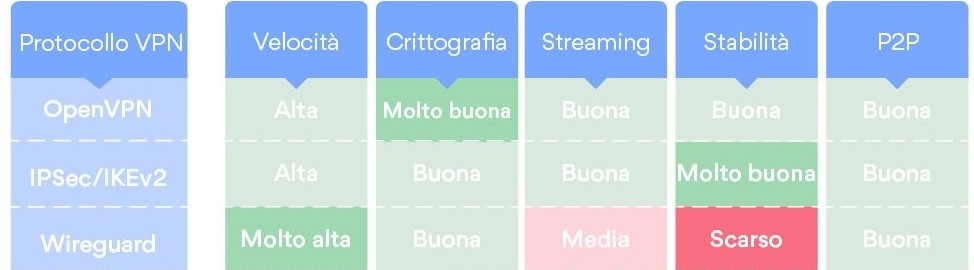
- OpenVPN: the most popular VPN protocol both because it is able to guarantee high level encryption (in fact it uses the 256bit OpenSSL certificate) and because it is an open source protocol, so it is freely available to everyone which allows anyone to see what this protocol actually does. It is also supported by most operating systems.
- PSec/IKEv2: the IKEv2 protocol uses the IPsec protocol to encrypt data traffic and only later creates the VPN tunnel. This protocol was created by Cisco and Microsoft to have a secure and efficient protocol, however it is not supported by everyone on all operating systems.
- Wireguard: un protocollo recente e ancora sperimentale. È un protocollo leggero e richiede meno risorse per cui è più veloce, tuttavia il suo obbiettivo non è di garantire l’anonimità dell’utente.
It's difficult to define which protocol is the best, however we can understand which can be the most adequate solution according to our needs choosing the right compromise between speed and encryption level, however OpenVPN protocol seems to be in general the best solution.
Proxy protocols
Proxy protocols can be:
- HTTP/HTTPS: is designed to interpret any traffic at the HTTP level. Proxies using it are therefore only able to work with web pages and will therefore be effective when using browsers. This protocol will be faster than a VPN or SOCKS proxy, but data can be traced more easily.
- SOCKS: this protocol is more versatile, but compared to the previous protocol, on average, it is slower. However, this protocol can support any kind of data traffic as long as the application in question supports this type of proxy.
When to use proxy and when to use VPN?
A proxy can be useful when you want to bypass a firewall or a blockade due to the geographical region in which you are located. However, this is true if you don't transmit sensitive data and you don't need to hide your online activities. However, you should take into account that some services such as Netflix have anti-proxy services and can therefore block your connection.
Proxies don't require software installation, so if you don't have a slow or obsolete device, using a proxy can be a good solution for these devices since they don't affect performance. This type of server can be useful when you want to optimize the bandwidth used, in fact there are also caching proxies that store copies of websites that are visited often so as to save loading time.
VPNs on the other hand are a must if we want to safeguard our sensitive data thanks to the encryption they offer. For example, if we want to access a public Wi-Fi connection, where cybercriminals often infiltrate, a VPN allows us to keep our data from being leaked to malicious parties.
VPNs also can be more effective than proxies for bypassing access to geographically restricted content or bypassing government censorship that may be provided, as mentioned earlier they may block proxies.
Conclusione
In general, for the protection of our privacy, you can opt for a VPN or a proxy. VPN is preferable because it ensures anonymity and protection of all data. This allows you to circumvent geopolitical restrictions and speed up the internet connection when the internet provider artificially reduces the bandwidth. The advantage of a proxy is the cost. Reliable VPN services are pay-as-you-go, and free ones are risky because they give free access to the server. So our data is available to everyone. For VPNs and proxies it is still recommended to rely on a paid service, as they can manipulate the data sent to the network. If you choose free services, take into account that personal data can be sold to third parties or, in the case of HTTP proxy servers, advertisements are often presented. A paid service guarantees, therefore, a more stable and reliable connection.
Edited by Brian Shehara Appuhamy from the VGen Engineering Hub


