
In motorsport competitions it is fundamental to prepare the driver for the circuits he will have to face, to verify if one set-up of the car is more efficient than another or how the driving and the aerodynamic load affect the duration of the tires. Having instruments capable of analyzing this type of information without putting the car on the track can be fundamental in a racing championship.
This is how driving simulators come into play: mechanical-computer systems that make it possible to reproduce in a realistic way the behavior of the car in a race.
The systematic diffusion and therefore the development of simulators is due to the lower economic impact compared to real track tests, moreover it is really difficult to perform a high number of tests on each circuit.
The Dallara company, founded in 1972 by the homonymous engineer Gian Paolo Dallara, plays a leading role in the field of motorsport, boasting collaborations with numerous teams in various championships, as well as being the sole supplier for the IndyCar, Indy Lights, F2, F3, World Series by Renault, Super Formula and Formula E championships.
Andrea Pontremoli, CEO & General Manager of the Dallara Group, encapsulates the concept behind the development of simulation technologies in a simple sentence: "innovation comes from error". In order to be innovative, says Pontremoli, it is necessary to be able to make mistakes many times and receive feedback on the error in a timely manner while keeping the cost of the process as low as possible. Through technology, then, the data obtained by computational analysis software is transformed into efficient alternative solutions that meet project objectives.
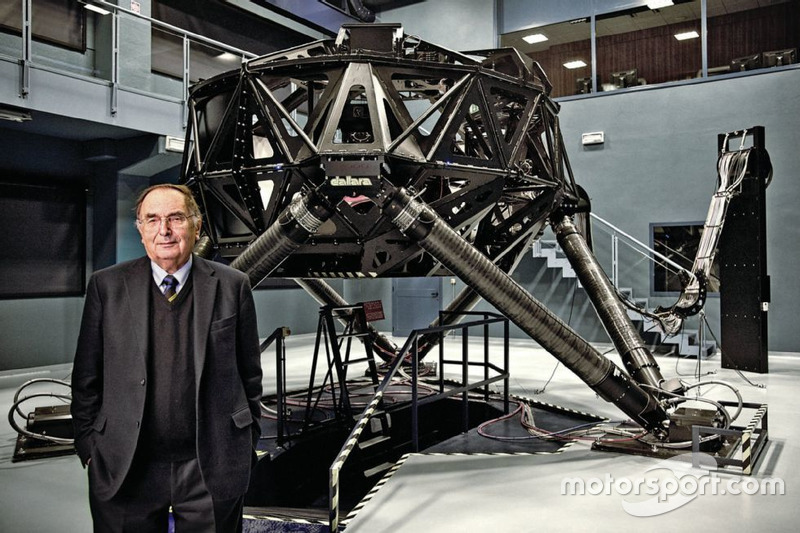
Dallara's core competencies are threefold: design and production, using carbon fiber composite materials suitable for high performance vehicles, aerodynamics (i.e. wind tunnel and CFD analysis) and vehicle dynamics (simulations and testing).
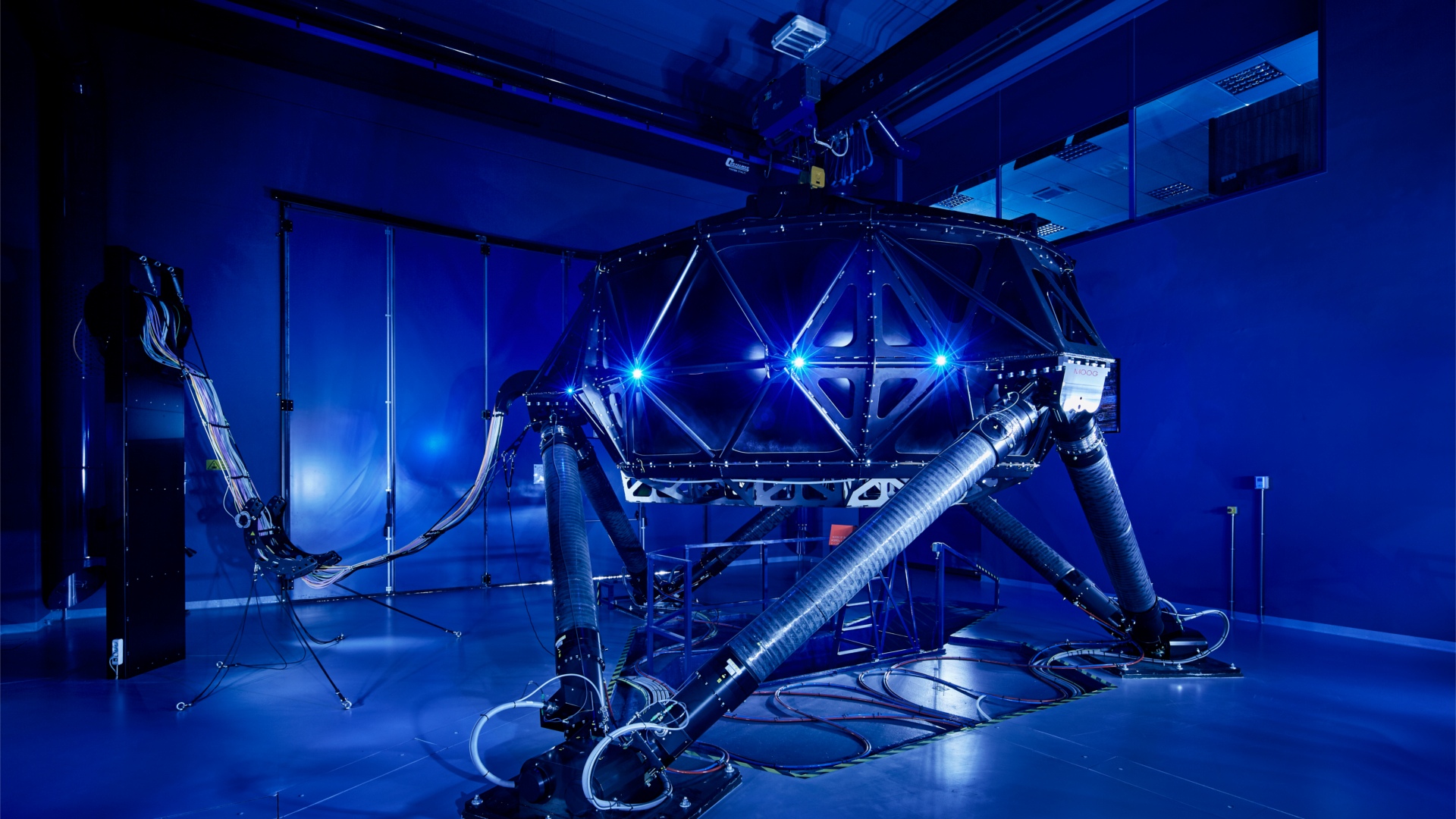
The Dallara simulator consists of six large, electronically controlled dynamic actuators that are ground-bound and support the cockpit, which is enclosed in a cage of steel and composite materials. The nickname "spider" derives naturally from the shape the simulator takes once it is in operation: the cockpit is raised and the legs move to follow the course of the track.
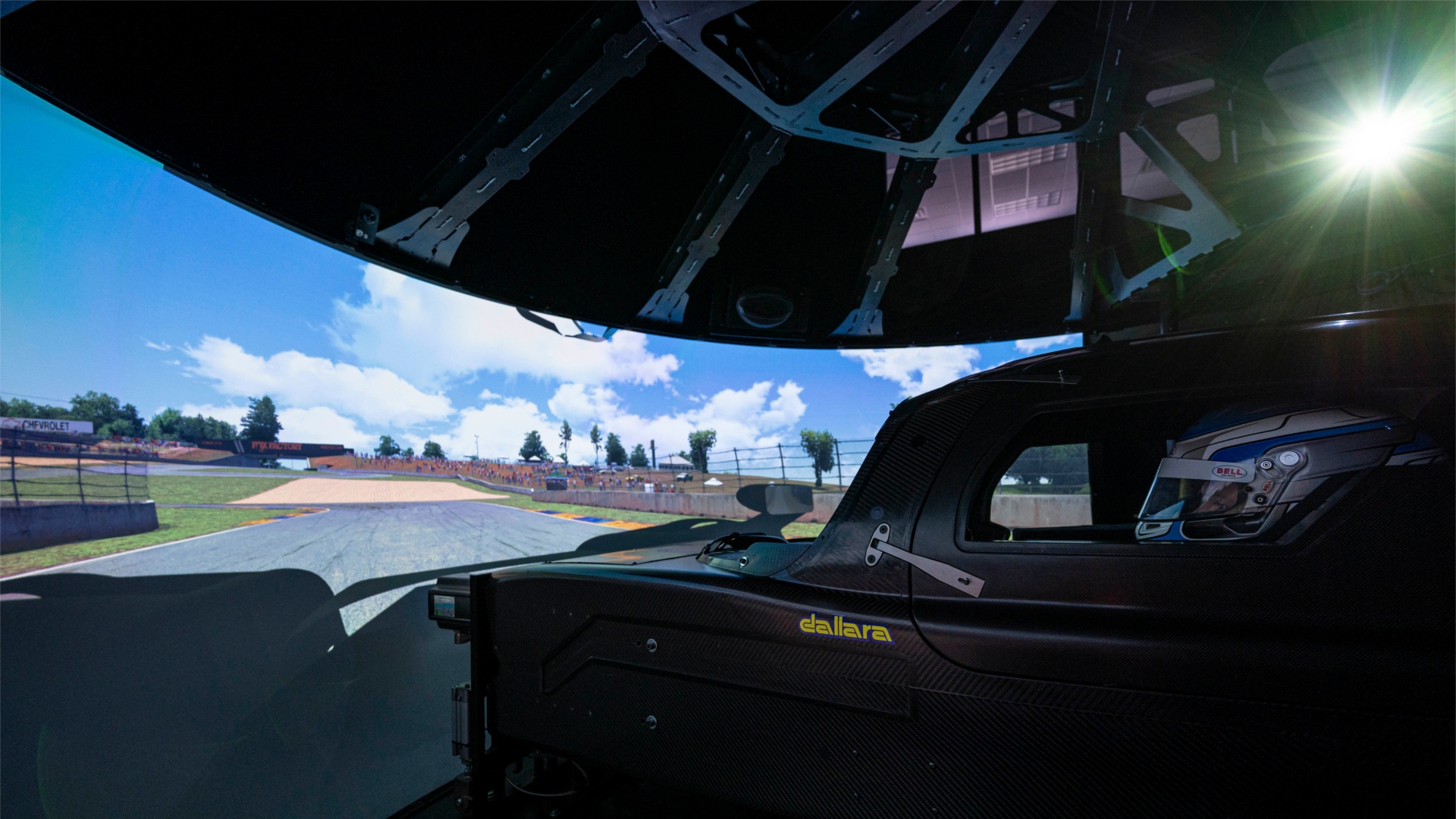
The driver is seated in the cockpit and is surrounded by five mega screens that cover a view of over 180 degrees in which the now perfect view of every track in the F1 world championship is reproduced.
The simulation environment is totally dark, except for the screens and artificial lights fixed on the cage, even the lighting is designed to reproduce the desired conditions.
The entire facility is housed in a stand-alone building, as it has three floors and requires additional rooms where engineers constantly monitor and set up simulation activities..
The data stored in the software reproduce all the details of the track, which can be real or imaginary. Among these, the vibrations produced by the passage of the vehicle on the kerbs, the G forces suffered by the driver during the curve up to the braking forces discharged on the single-seater.
The instrument has reached such an advanced level that, thanks to the development of numerical models by Dallara engineers in collaboration with Pirelli, it is possible to faithfully determine the consumption of the tires during the run on the track, setting the conditions on the car, the inflation pressure and the atmospheric conditions instant by instant.
The simulator is used in three areas:
- - Training: the simulator allows a driver to drive the same chassis user on the track, with the same controls (pedals, brake, dashboard) and the same level of feedback (steering wheel effort and brake) for as long as necessary.
- - Set-up definition: the team engineers are able to analyze the aerodynamic loads that develop during the race, in this way it is possible to create more efficient components to be mounted on the single-seater (such as the bottom or the aileron).
- - Creation of a new vehicle
There are only three simulators: one is the one used by the Haas Formula 1 team, but it is also used for the preparation of drivers in minor championships such as Formula 2 and Formula 3 (in which Scuderia Dallara itself is involved); the second is located in Indianapolis, home of the famous 500 Miglia competition, while the third is owned by Scuderia Ferrari, starting from the 2019-2020 championship.
We are faced with yet another example in which mechanics and electronic apparatuses collaborate to give life to a unique product, basing its reliability on computational precision and the constant updating of software.
Written by Alessio Capone from the VGen Engineering Hub


